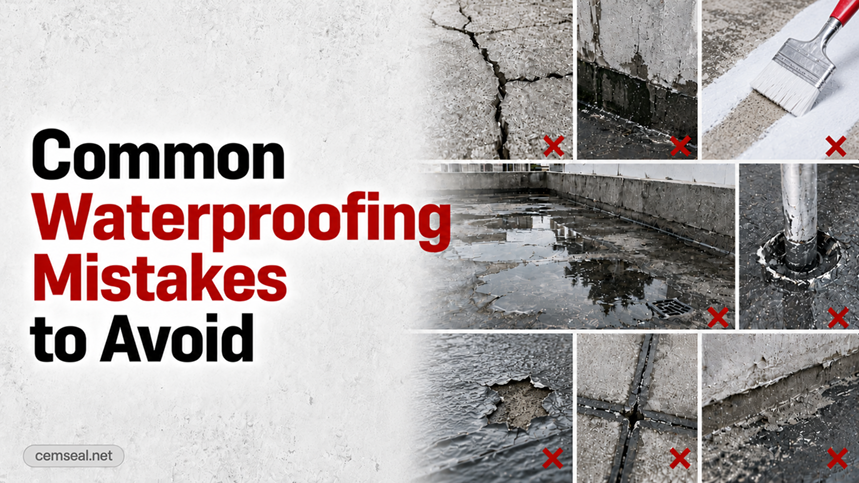
Common Waterproofing Mistakes to Avoid
Waterproofing is one of the most critical aspects of building construction and maintenance, yet it is often overlooked or poorly executed. Whether it’s a residential home, commercial building, or industrial structure, improper waterproofing can lead to severe issues such as leakage, dampness, structural damage, and costly repairs.
In many cases, waterproofing failures are not due to product defects but due to avoidable mistakes during application, planning, or material selection. Understanding these mistakes can help you ensure long-lasting protection and avoid recurring problems.
Let’s explore the most common waterproofing mistakes and how to avoid them.
1. Ignoring Proper Surface Preparation
One of the biggest mistakes in waterproofing is applying the product on an unprepared surface. Dust, oil, loose particles, cracks, or moisture on the surface can prevent proper bonding of the waterproofing material.
What problems does it cause?
- Reduces adhesion
- Causes peeling or blistering
- Leads to early failure of the waterproofing layer
How to avoid:
Always clean the surface thoroughly. Repair cracks using Cemseal Krackfill, remove debris, and ensure the surface is properly cured and dry (or as per product requirement) before application.
2. Choosing the Wrong Waterproofing Material
Not all waterproofing products are suitable for every application. Using the wrong product for a specific area—like terraces, bathrooms, basements, or water tanks—can result in failure.
Common mistake:
Using the same waterproofing solution for all areas without understanding their specific requirements.
How to avoid:
Choose products based on:
- Exposure (sunlight, water pressure)
- Surface type (concrete, plaster, tiles)
- Area usage (wet area, roof, underground)
Using specialized waterproofing products ensures durability and effectiveness.
3. Skipping Primer Application
Many applicators skip the primer layer to save time or cost, but this can significantly reduce the effectiveness of waterproofing.
Why primer is important:
- Enhances bonding between surface and coating
- Seals pores
- Improves overall performance
How to avoid:
Always follow the recommended system, including primer, base coat, and topcoat. Do select priming material and method as per manufacturer’s guidelines.
4. Incorrect Mixing of Materials
Waterproofing materials often require precise mixing ratios. Adding too much or too little water or chemicals can compromise the product’s performance.
Effects of improper mixing:
- Reduced strength
- Poor adhesion
- Cracking or shrinkage
- Poor Flexibility (making the material brittle)
How to avoid:
Strictly follow manufacturer instructions for mixing proportions and mixing time.
5. Applying Inadequate Thickness
Applying waterproofing coatings too thin is a very common mistake. A thin layer may look fine initially but will not provide sufficient protection. At the same time, uneven and extra thick layers may make the curated waterproofing layer brittle in some cases.
Risks:
- Cracks develop easily
- Water seepage over time
- Reduced lifespan
How to avoid:
Apply the recommended number of coats and maintain proper thickness as specified.
6. Not Treating Joints and Cracks Properly
Joints, and cracks are the most vulnerable points for water leakage. Ignoring them or treating them improperly can lead to failure even if the rest of the surface is well waterproofed.
Common mistake:
Applying waterproofing directly over untreated cracks.
How to avoid:
- Use sealants or crack fillers
- Apply reinforcing mesh on joints
- Pay special attention to edges
7. Poor Drainage Planning
Even the best waterproofing system can fail if water is allowed to accumulate on surfaces like terraces or roofs.
Why it matters:
- Standing water increases pressure on the waterproofing layer
- Leads to faster deterioration
How to avoid:
Ensure proper slope and drainage system so water flows away quickly.
8. Ignoring Weather Conditions During Application
Weather plays a crucial role in waterproofing success. Applying waterproofing during unsuitable conditions can affect curing and bonding.
Common issues:
- Application during rain or rain comes within manufacturer specified time duration after application
- Extremely high or low temperatures
How to avoid:
Apply waterproofing under manufacturer recommended weather conditions and allow sufficient curing time.
9. Rushing the Curing Process
Curing is essential for waterproofing materials to achieve their full strength and performance. Many projects fail because curing is rushed or skipped.
Effects:
- Weak bonding and edges
- Cracks and shrinkage
- Reduced durability
How to avoid:
Allow proper curing time as per product guidelines before exposing the surface to water or load.
10. Lack of Skilled Application
Even the best waterproofing product will fail if applied incorrectly. Lack of trained applicators is a major reason for waterproofing issues.
Common problems:
- Uneven application
- Missed spots
- Incorrect layering
- Avoidance of usage guidelines by manufacturer
How to avoid:
Hire experienced professionals or ensure proper training for applicators.
11. Not Conducting a Water Test
Many people skip the final water test after waterproofing, assuming the job is done.
Why it’s important:
- Identifies leaks before finishing work
- Prevents future damage
- Ensures customer satisfaction
How to avoid:
Conduct a ponding test (especially for terraces and bathrooms) to ensure there are no leaks.
12. Delaying Waterproofing Work
Waterproofing is often treated as a secondary task and delayed until problems appear. By then, the damage is already done. But remember, a stitch in time saves nine!
Consequences:
- Structural weakening
- Increased repair costs
- Health issues due to dampness and mold
- Creates conflicts with immediate neighbour sharing the same wall.
How to avoid:
Incorporate waterproofing during the construction stage itself.
13. Ignoring Maintenance
Waterproofing is not a one-time job. Over time, wear and tear can reduce its effectiveness.
Common mistake:
Assuming waterproofing will last forever without inspection.
How to avoid:
- Conduct periodic inspections
- Repair minor damages early
- Reapply coatings if needed
14. Relying on the word of the contractor and/or manufacturer regarding warranty
Many contractors and manufacturers provide a warranty for waterproofing work. You have to note that the warranty always comes with terms & conditions.
Common mistake:
Assuming that the applicator of the contractor has followed all the guidelines by manufacturer regarding warranty to claim as per terms & conditions. If any problem occurs at a later date, the manufacturer will not uphold the warranty in this case.
How to avoid:
- Always check warranty guidelines/ booklet for terms & conditions of the manufacturer and make sure that applicator/ contractor follows the same.
Conclusion
Waterproofing is an investment that protects your property from long-term damage and costly repairs. Most waterproofing failures are not due to the products themselves but due to mistakes that can easily be avoided with proper planning, correct material selection, and skilled application.
By avoiding these common mistakes, you can ensure a durable, leak-proof structure that stands the test of time. Whether you are a homeowner, builder, or contractor, paying attention to these details will save you significant time, money, and stress in the long run.
Disclaimer: Blogs on Cemseal website are created for education purposes only. Kindly contact your engineer /architect/ site contractor for further information.